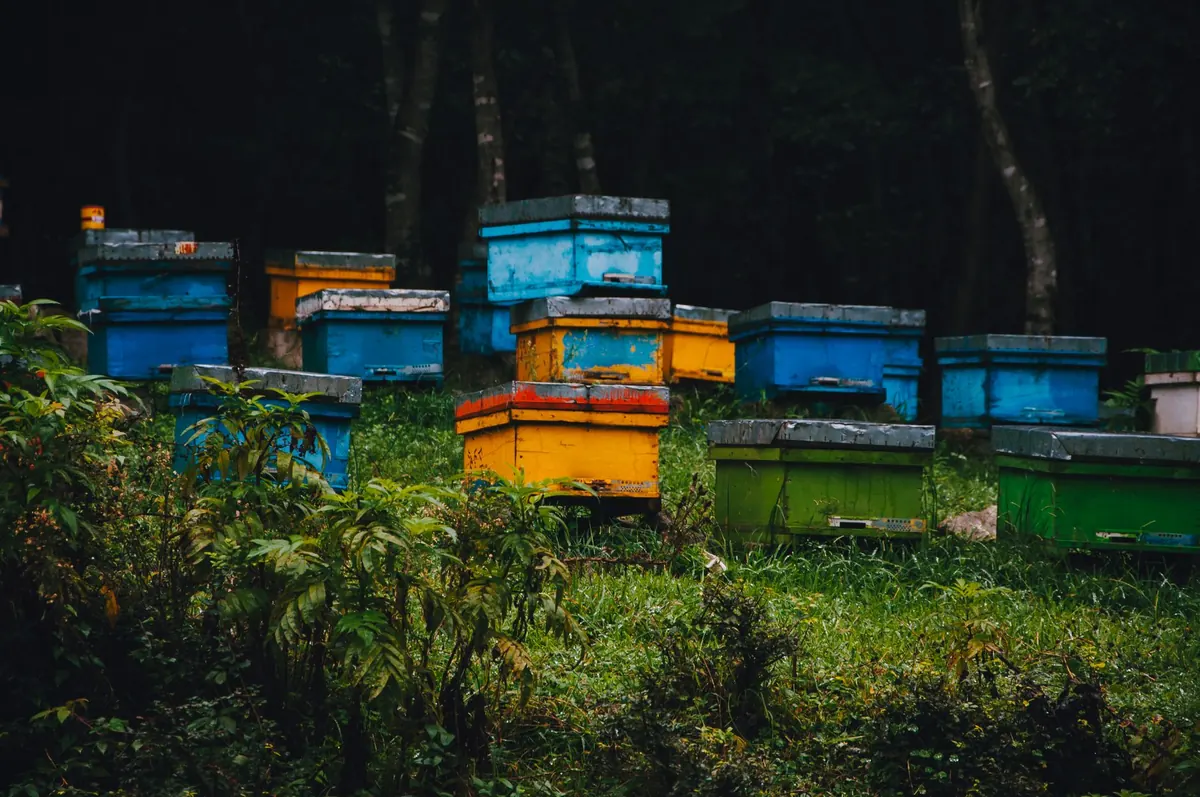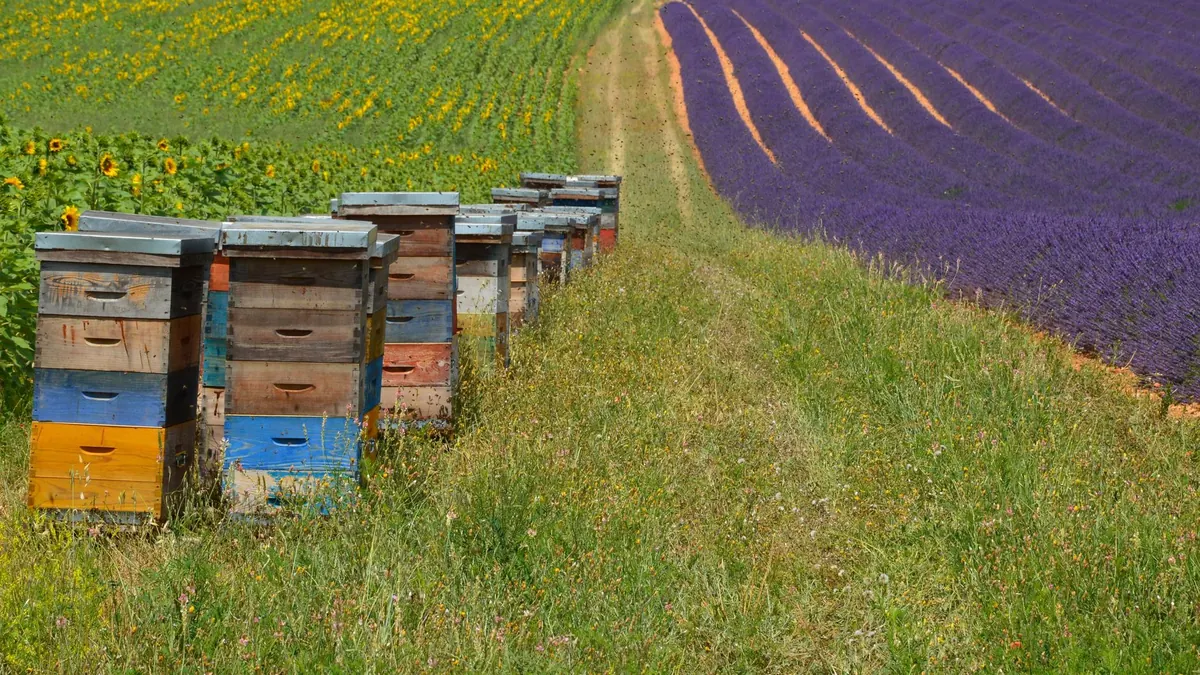
Choosing where to put a hive is one of the few decisions you can get right for years with a single afternoon's thought. Get it wrong and you will be shifting boxes at dusk, apologising over the fence, or watching a colony struggle through a wet spring. Good siting is part bee biology, part weatherproofing and part local diplomacy.
Start With the Sun
Honey bees are cold-blooded in the sense that matters here: they need warmth to get going. A hive that catches the morning sun is awake and flying while a shaded one is still clustered and stiff. In the UK that early warmth makes a real difference to spring build-up, when colonies are trying to raise brood in changeable weather.
Aim for a spot that gets sun from first light until early or mid-afternoon. Some shade during the hottest part of a July day is no bad thing — hives in full glare for sixteen hours can get uncomfortably warm, and you will see bees bearding across the entrance in the evening. Dappled shade from a tall, thin-canopied tree is ideal; deep, damp shade is not.
A south or south-east facing entrance suits British conditions well, though entrance direction matters less than most beginners expect. If your only option is an exposed, sun-baked corner, turning the entrance north-east can take the edge off the heat.
Do avoid the obvious traps: directly beneath dense evergreens, which drip, shade and drop resin; the bottom of a slope where cold air pools on frosty nights; and ground that stays boggy from October to April.
Build a Windbreak, Not a Wind Tunnel
Wind is the quiet problem. It chills brood, blows foragers off course, rattles roofs loose and makes inspections miserable. A hedge, fence or wall on the prevailing windward side — usually south-west in most of the UK — is worth more than any expensive hive.
The distance matters. A permeable barrier such as a hedge slows the wind and creates a calm pocket behind it. A solid barrier placed right against the hive can produce eddies and downdraughts instead, kicking turbulence straight into the entrance. Set the hives a few metres back from the shelter, roughly the height of the barrier away.
If you have no natural shelter, plant one — a mixed native hedge will take a few years but lasts decades. In the meantime, straw bales, wattle panels or a slatted fence will take the sting out of the worst of it. Whatever you do, strap or weight your roofs. A colony that loses its roof in a gale in February rarely recovers well.
Water Within Easy Reach
Bees need water throughout the year, and a lot of it in summer: to dilute stored honey, to feed brood and to cool the hive. A strong colony on a hot day will send foragers back and forth constantly.
If there is a pond, stream or ditch within a few hundred metres, you are sorted. If not, supply water yourself and start before the colony needs it. A shallow tray filled with pebbles, corks or gravel gives bees somewhere to land and drink without drowning. Refresh it weekly so it does not turn into a mosquito nursery.
This is also a neighbour issue in disguise. Bees go to the nearest convenient water, and that may be a paddling pool, a water butt, a pet bowl or next door's washing-up water. Put a good, safe source close to the hives, in the sun, and you head off a great many small grievances before they start.
Think About Flight Paths in Three Dimensions
Bees leaving a hive climb steadily. Use that. A hedge, fence or trellis roughly two metres high, a couple of metres in front of the entrance, lifts departing foragers above head height within a few wingbeats. That single piece of planting solves most of the awkwardness of keeping bees near people.
Other things to weigh up:
- Point entrances away from doors, patios, washing lines, garden benches and busy paths.
- Keep hives several metres back from gates, stiles, bridleways and public footpaths.
- Avoid sites where people pass at head height on the other side of a thin fence.
- Steer clear of paddocks and stables. Horses and livestock can be badly bothered by bees, and a spooked animal is a serious problem.
- Keep grass around the hives short so you are not mowing into the entrance on a warm afternoon.
Keeping the Peace With Neighbours
Most beekeeping disputes are not about stings. They are about a neighbour who did not know, was not asked, and found bees in the greenhouse or the swimming pool.
Talk to the people next door before the hives arrive, not after. Explain what you are doing, where the hives will go, how the flight path will be lifted over their garden, and what you will do if there is a problem. A jar of honey in the first season does more for community relations than any fence. Offer to manage swarming properly — swarm control is a courtesy to everyone within a few hundred metres.
Then check the paperwork. Tenancy agreements, allotment rules, deeds and restrictive covenants can all affect whether you may keep bees, and some local authorities have their own conditions. If you are unsure about any of it, ask the relevant authority or take professional advice before you site anything. It is far easier to get this right at the start.
Access, Ground and Practicalities
You will visit these hives in the rain, in the dark, in a bee suit, carrying a full super that weighs more than you remember. Site for that person, not for the sunny afternoon version of yourself.
Choose firm, level ground and stand hives on paving slabs, sleepers or a proper stand. Aim for a short, safe carry from a vehicle — not a steep slope or a squeeze through a gap that will eventually take a toll on your back. Avoid frost pockets and areas that flood; a slightly raised, gently sloping site is better than a flat hollow. And think about security: hives tucked out of sight of a road, behind a gate you can shut, are less likely to be interfered with.
A Short Checklist Before You Commit
- Sun from early morning to mid-afternoon, with a little shade in high summer.
- Shelter from prevailing wind, set a few metres back from the barrier.
- A reliable water source, provided if none exists nearby.
- Entrances facing away from people, animals and busy routes, with a screen to lift the flight path.
- Neighbours informed, permissions checked.
- Firm, level, well-drained ground with decent access.
Live With It for a Season
No site is perfect, and the first year is a chance to learn what your spot actually does. Watch where the wind bites in January, where water sits after a wet week, which direction foragers leave in, and whether the flight path crosses anyone's patio at head height.
If something needs changing, do it gently. Bees navigate by memory, so a hive shifted a few metres in midsummer can leave foragers circling the old spot for days. Move it a little at a time, or shift it far enough away that returning bees cannot find the original site and must reorient from scratch. Then leave it alone and let the colony settle. A well-chosen apiary quietly disappears into the landscape — and that is exactly the point.
Photo: SlimMars 13 / Pexels